
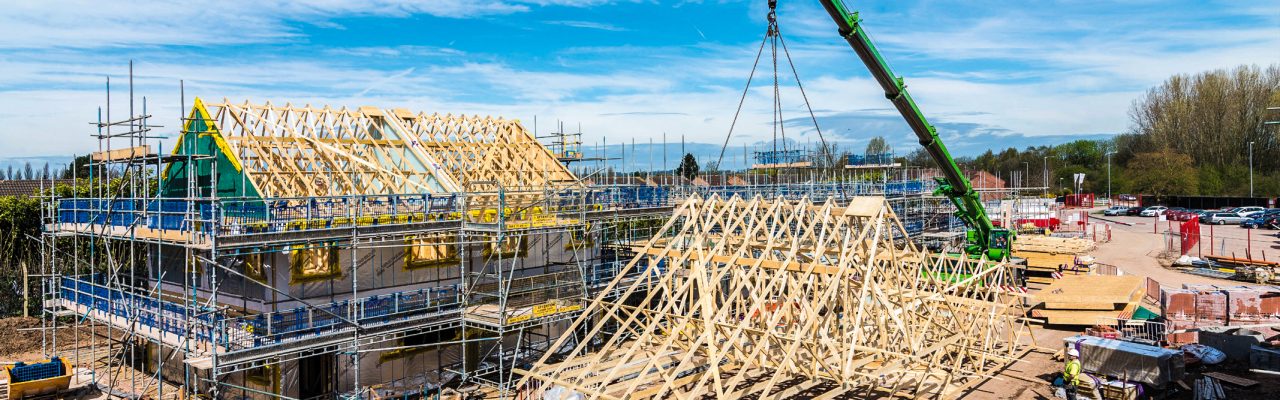
The construction industry is under increasing pressure to deliver projects faster, more sustainably, and with greater cost certainty. As demand for housing and commercial developments continues to grow, many developers are turning to Modern Methods of Construction (MMC) to improve project outcomes.
Among the most widely adopted MMC solutions is timber frame construction, which offers significant advantages in efficiency, quality, sustainability, and overall project delivery.
So, what exactly is MMC, and why are more developers choosing timber frame systems?
What Are Modern Methods of Construction (MMC)?
Modern Methods of Construction (MMC) is a broad term used to describe innovative building techniques that improve the efficiency of the construction process. Rather than relying solely on traditional on-site building methods, MMC incorporates off-site manufacturing, digital design, and precision-engineered components that can be assembled quickly and accurately on-site.
MMC covers a variety of approaches, including:
- Volumetric modular construction
- Panelised systems
- Pre-manufactured components
- Hybrid construction methods
- Timber frame systems
The common goal is simple: reduce waste, improve quality, accelerate build programmes, and create more sustainable developments.
Why Is Timber Frame Considered an MMC Solution?
Timber frame construction is one of the most established and proven forms of MMC in the UK.
Instead of building structural walls entirely on-site, timber frame panels are manufactured in a controlled factory environment before being delivered ready for installation. This off-site process allows for greater accuracy, consistency, and speed compared to traditional masonry construction.
At Walker Timber Engineering, timber frame systems are precision-engineered to meet the specific requirements of each project, helping developers achieve programme certainty while maintaining high-quality standards.
How Does Timber Frame Improve Construction Efficiency?
One of the biggest advantages of timber frame construction is speed.
Because the structural elements are manufactured off-site while groundworks are taking place, multiple stages of the project can progress simultaneously. This significantly reduces overall construction times.
Once delivered to site, timber frame structures can be erected quickly, creating a weather-resistant shell far sooner than traditional methods.
For developers, this means:
- Faster project completion
- Earlier access for follow-on trades
- Reduced labour requirements on-site
- Quicker routes to market and occupancy
In an industry where delays can have significant financial implications, reducing programme length can provide a major competitive advantage.
Can MMC Help Reduce Development Costs?
While initial comparisons often focus on material costs alone, the true value of MMC and timber frame lies in whole-project savings.
Timber frame systems help reduce costs through:
Shorter Build Programmes
Faster construction means lower preliminary costs, reduced site overheads, and fewer delays.
Improved Predictability
Factory-controlled manufacturing reduces the risk of errors, material shortages, and weather-related disruption.
Reduced Waste
Precision manufacturing minimises material waste compared to traditional site-based construction methods.
Lower Labour Dependency
With much of the work completed off-site, developers can reduce their reliance on increasingly scarce on-site labour.
When viewed across the entire project lifecycle, timber frame can contribute to significant cost efficiencies while improving delivery certainty.
How Does Timber Frame Support Sustainability Goals?
Sustainability has become a key priority for developers, investors, planners, and homeowners alike.
Timber frame construction aligns naturally with these objectives.
Timber is a renewable building material that stores carbon throughout its lifespan. Compared with many traditional construction materials, timber generally requires less energy to produce and process, helping to reduce embodied carbon within a development.
Additional sustainability benefits include:
- Reduced construction waste
- Lower transportation requirements due to lighter materials
- Improved thermal performance
- Enhanced energy efficiency for completed buildings
As regulations continue to evolve and environmental targets become more demanding, MMC solutions such as timber frame provide developers with a practical route towards lower-carbon construction.
Does Timber Frame Compromise Quality?
Quite the opposite.
Because timber frame panels are manufactured in controlled factory conditions, quality assurance processes can be applied consistently throughout production.
This helps eliminate many of the variables that can affect traditional on-site construction, such as weather conditions, material exposure, and inconsistent workmanship.
The result is:
- Greater dimensional accuracy
- Improved airtightness
- Consistent build quality
- Enhanced thermal performance
For developers, this can lead to fewer defects, reduced snagging, and improved customer satisfaction.
Is Timber Frame Suitable for Large-Scale Developments?
Yes.
Modern timber frame systems are highly versatile and can be used across a wide range of projects, including:
- Residential developments
- Affordable housing schemes
- Apartment buildings
- Student accommodation
- Care facilities
- Commercial projects
As MMC adoption continues to increase across the UK construction sector, timber frame is proving to be a scalable solution capable of supporting developments of all sizes.
Where Can Developers Learn More About Timber Frame Construction?
Understanding how timber frame systems work is often the first step towards unlocking the benefits of MMC.
To help developers, contractors, and construction professionals make informed decisions, Walker Timber Engineering has created a comprehensive guide: Timber Frame Explained.
The guide explores:
- How timber frame construction works
- The design and manufacturing process
- Key performance benefits
- Common misconceptions
- Considerations for developers and project teams
t’s a valuable resource for anyone looking to understand why timber frame continues to play a central role in modern construction.
For a closer look, see timber frame in action at one of our upcoming factory tours in Hixon or Wisbech. Places are limited, so book your place today.
Why Are More Developers Choosing MMC?
The challenges facing construction aren’t getting any smaller. Rising costs, labour shortages, sustainability targets, and increasing housing demand all require smarter ways of building.
Modern Methods of Construction offer a practical solution, and timber frame remains one of the most effective and proven MMC approaches available today.
By combining off-site manufacturing with efficient on-site installation, timber frame helps developers achieve faster build programmes, greater cost certainty, improved sustainability performance, and consistently high-quality results.
As the industry continues to evolve, developers who embrace MMC will be better positioned to deliver successful projects that meet both commercial and environmental objectives.